Together, we solve the challenges of tomorrow.
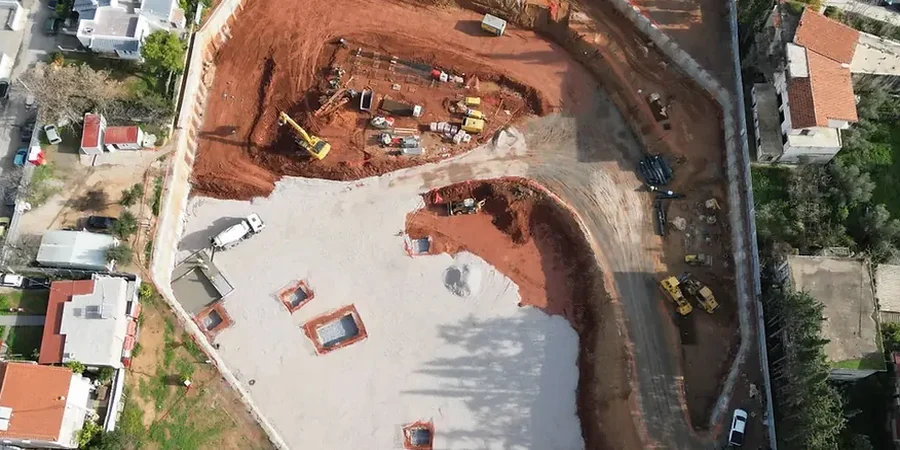
SEE MORE →Excavation work in the Saguenay region demands a rigorous, geotechnically informed approach from the very first shovel turn. This category encompasses the full lifecycle of subsurface earthworks, including site investigation, stability analysis, construction design, and real-time performance monitoring. Whether a project involves trenching for municipal utilities, cutting back a rock slope, or sinking a deep shaft, the behavior of the local ground dictates every decision. Understanding how Saguenay's soils and rock will react to unloading, vibration, and groundwater fluctuation is not just a technical exercise; it is a fundamental requirement for protecting workers, the public, and the long-term integrity of the built environment.
The local geology presents a distinctive set of challenges that set Saguenay apart from other regions of Canada. Much of the area is underlain by the Canadian Shield's granitic and gneissic bedrock, often mantled by a complex stratigraphy of glacial till, glaciomarine silts, and sensitive clays deposited by the ancient Laflamme Sea. The famous Champlain Sea clays, known for their metastable structure and potential for sudden liquefaction, are a primary concern. An excavation that disturbs these sensitive clays without proper support or dewatering can trigger a retrogressive landslide, a hazard that has historically reshaped entire slopes along the Saguenay Fjord and its tributaries. This means that a standard cut-and-cover operation can quickly escalate into a complex geotechnical problem requiring specialized geotechnical analysis for soft soil tunnels and deep cuts.
Regulatory compliance in Quebec provides a strict framework that governs all excavation activities. The primary standard is the Quebec Construction Code, Chapter I – Building, which adopts the National Building Code of Canada with provincial amendments, alongside CAN/CSA S6 for bridge and highway structures. Crucially, for deep excavations, the professional must adhere to the guidelines set forth by the Société de l'assurance automobile du Québec (SAAQ) and the Ministère des Transports et de la Mobilité durable (MTMD) when working near public rights-of-way. A geotechnical report sealed by a member of the Ordre des ingénieurs du Québec (OIQ) is mandatory, detailing soil parameters, design groundwater levels, and a clearly defined excavation and support plan. For projects near watercourses or within landslide-prone zones, additional constraints from the Politique de protection des rives, du littoral et des plaines inondables apply, demanding stringent erosion and sediment control measures.
The types of projects that demand this specialized expertise are diverse and critical to Saguenay's infrastructure. Urban densification in boroughs like Chicoutimi and Jonquière frequently requires deep basements for multi-story buildings, necessitating a thorough geotechnical design of deep excavations to manage lateral earth pressures and prevent damage to adjacent heritage structures. Major highway upgrades, such as the widening of Route 175 or the maintenance of the Dubuc Bridge approaches, involve large-scale rock cuts and embankment excavations where joint orientation and blasting control are paramount. Industrial facilities, including those in the aluminum sector, often require excavations for containment structures and underground utilities in aggressive chemical environments. Throughout all these applications, continuous geotechnical excavation monitoring with inclinometers, piezometers, and survey prisms is the only way to validate design assumptions and ensure that performance matches predictions.
The primary risks stem from the presence of sensitive glaciomarine clays prone to retrogressive landslides when disturbed, and variable bedrock conditions typical of the Canadian Shield. High groundwater levels near the Saguenay Fjord can also destabilize cut faces. A thorough pre-construction investigation is essential to identify these hazards and design appropriate support and dewatering systems.
Deep excavations fall under the Quebec Construction Code and require a sealed geotechnical report from an OIQ engineer. Design must follow MTMD guidelines for public projects and CAN/CSA S6 for structures near highways. The Politique de protection des rives also applies if the work is near water, enforcing strict rules against slope destabilization and sedimentation.
Sensitive clays lose significant strength when remolded, making them unsuitable for unsupported vertical cuts. Support systems must minimize ground disturbance; soldier piles with lagging or secant pile walls are often preferred over methods that induce vibration. The design must also account for long-term creep and the potential for pore pressure buildup behind the wall.
Given the unpredictable behavior of sensitive soils and fractured rock, real-time monitoring with instruments like inclinometers and piezometers provides early warning of unexpected movements or water pressure changes. This data allows engineers to adjust the construction sequence or support system immediately, preventing costly delays and ensuring public safety as required by Quebec's safety codes.