Together, we solve the challenges of tomorrow.
SEE MORE →In Saguenay, the stability of any structure begins with what lies beneath—its foundation. The category of foundations encompasses the engineering and construction of the base systems that transfer building loads to the ground, ensuring safety, durability, and compliance with local conditions. This includes shallow footings, deep pile systems, and specialized solutions tailored to the region's demanding environment. Given Saguenay's history of seismic activity and its post-glacial terrain, a well-designed foundation is not just a structural necessity but a critical safeguard against long-term settlement and catastrophic failure.
The geological context of Saguenay is shaped by the Saguenay Graben, a rift valley with deep unconsolidated deposits of marine clay and glacial till overlying Precambrian bedrock. These clays, particularly the sensitive Leda clay, are prone to sudden loss of strength when disturbed, a phenomenon known as quick clay behavior. This risk, combined with a shallow bedrock table in some areas and significant frost penetration depths—often exceeding 1.5 meters—demands rigorous geotechnical investigation. Foundation design here must account for variable bearing capacities, potential slope instabilities along the Saguenay Fjord, and the need for drainage systems to manage seasonal saturation of surficial soils.
All foundation work in Saguenay falls under the Quebec Construction Code, which integrates the National Building Code of Canada (NBC) with provincial amendments. Chapter I, Building, and Chapter III, Geotechnical Standards, mandate site-specific soil studies and adherence to CAN/BNQ 2501-130 for geotechnical site investigations. For deep foundations, CSA S6:19, the Canadian Highway Bridge Design Code, often governs structural requirements, while CAN/CSA-A23.3 provides guidelines for concrete design in aggressive soil environments. Municipal regulations, such as those from Ville de Saguenay, may impose additional frost protection measures and excavation permits, particularly in zones mapped for landslide risks under the Programme de prévention des risques naturels.
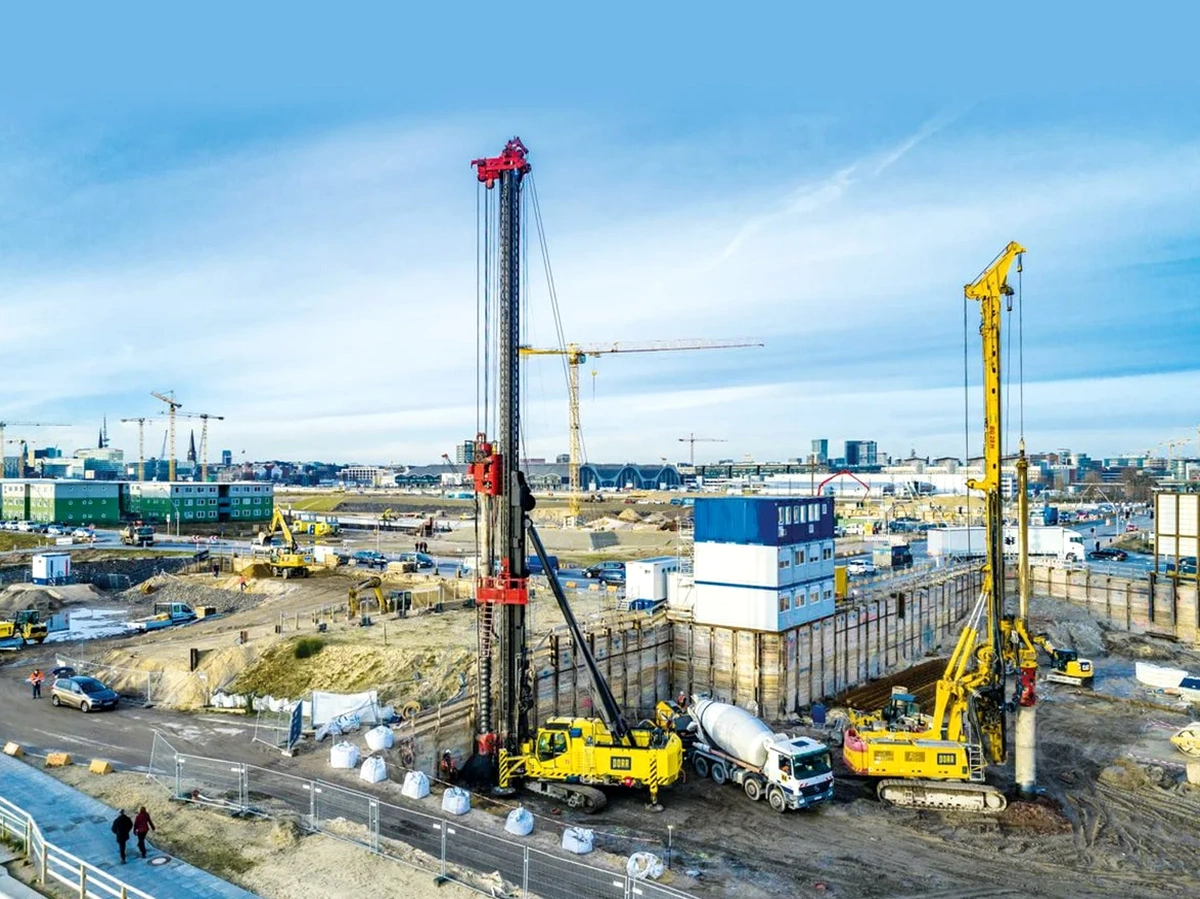
Projects requiring specialized foundation engineering are diverse across the region. Residential developments on the clay plains of Jonquière often need pile foundation design to bypass weak near-surface soils and reach competent till or bedrock. Industrial facilities near the aluminum smelters in La Baie demand deep foundations capable of resisting dynamic loads and chemical exposure. Infrastructure along the fjord, including bridge abutments and retaining walls, relies on anchored systems to counteract lateral earth pressures. Even agricultural structures in the Lac-Saint-Jean basin benefit from engineered pad foundations that mitigate seasonal frost heave, illustrating the universal need for geotechnical expertise in this unique landscape.
The primary challenges stem from sensitive marine clays, particularly quick clay, which can liquefy when disturbed, and deep frost penetration exceeding 1.5 meters. Variable bedrock depth and high groundwater levels in glacial till also require careful assessment. These conditions often necessitate deep foundations like piles to bypass weak soils and prevent differential settlement or sudden slope failures.
Foundation design is governed by the Quebec Construction Code, which adopts the National Building Code of Canada with provincial modifications. Key standards include CAN/BNQ 2501-130 for geotechnical investigations, CSA S6:19 for deep foundations in infrastructure, and CAN/CSA-A23.3 for concrete durability. Municipal regulations may add specific frost protection and excavation requirements in mapped risk zones.
Pile foundations are recommended when near-surface soils consist of weak, compressible clay or loose silt, where bearing capacity is inadequate for structural loads, or in areas with high frost susceptibility. They are also essential on sloping terrain near the Saguenay Fjord to resist lateral forces and in industrial sites requiring deep anchorage for heavy equipment or dynamic loads.
Seasonal frost can cause significant ground heave, lifting shallow foundations and leading to structural cracking or misalignment. The design must include frost protection measures such as deepened footings below the frost line, insulation layers, or thermosyphons. Inadequate frost protection can result in costly repairs, especially in clay soils that retain moisture and are highly frost-susceptible.