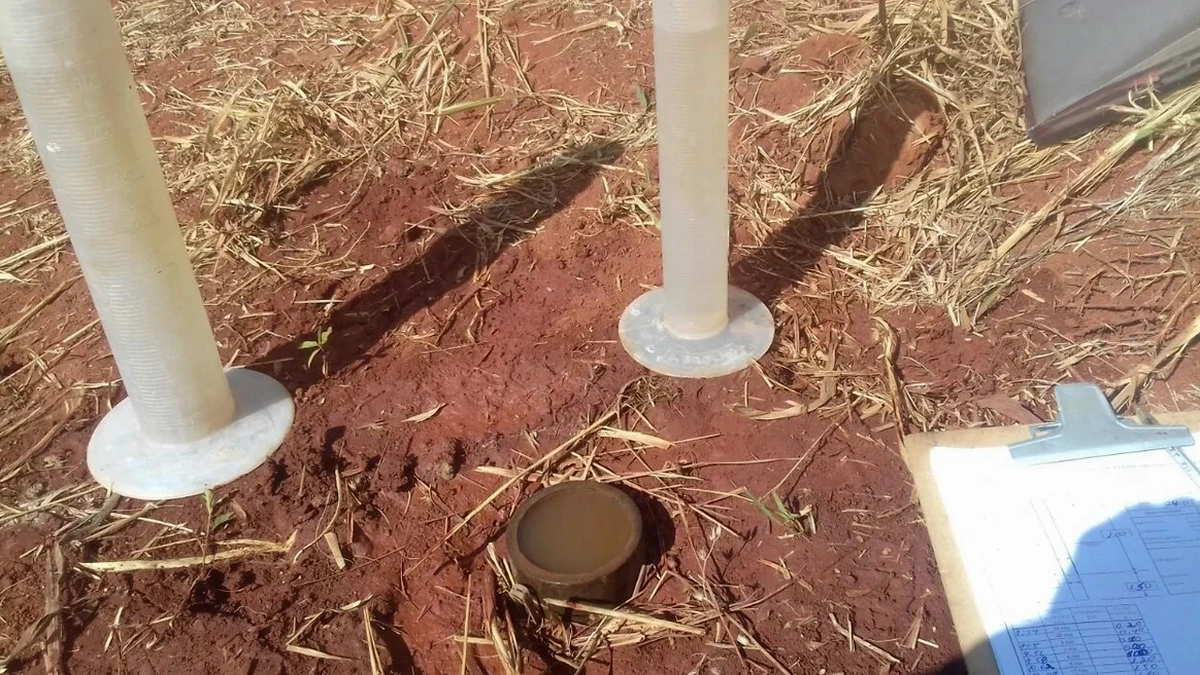
Saguenay’s development, shaped by the 1996 deluge and its legacy of hydroelectric infrastructure, places a singular emphasis on understanding groundwater. The city, carved through the Precambrian Shield and mantled with glacial and marine clays, sits on terrain where a misjudged permeability value can cascade into catastrophic delays. For the Shipshaw or Chute-à-Caron sectors, our team performs field permeability testing that isolates fractures and soil horizons with the precision required by CSA and ASTM standards. Whether dealing with deep foundations near the Rivière Saguenay or assessing a new industrial site in Jonquière, the Lefranc test in soils and the Lugeon test in rock provide the direct hydraulic conductivity measurements that lab tests simply cannot replicate. We integrate this data with in-situ permeability correlations when site access constrains drilling, ensuring every report reflects the complex hydrostratigraphy typical of this region.
In the Saguenay graben, a single Lugeon stage in fractured gneiss can differentiate between a tight abutment and a grout-intensive curtain requirement.
Quick answers
What is the typical cost range for a field permeability test program in Saguenay?
For a standard investigation including Lugeon testing in rock or Lefranc tests in soil, project costs typically range from CA$750 to CA$1,600 per day, depending on mobilization distance, the number of test intervals, and packer setup complexity. A full program with multiple boreholes and piezometer installations will scale accordingly.
When should we specify a Lugeon test instead of just relying on RQD and fracture counts?
RQD tells you about core recovery, not hydraulic conductivity. In the fractured bedrock of the Saguenay region, a tightly jointed gneiss can have RQD > 80% but still transmit significant flow through a single open discontinuity. Specify a Lugeon test whenever a dam foundation, tunnel alignment, or deep excavation requires a quantitative assessment of rock mass permeability for grouting or dewatering design.
How does the Lefranc test in Saguenay’s clays differ from a standard falling-head test in sand?
In the sensitive clays, we must use very low hydraulic gradients to avoid disturbing the soil structure during testing. Unlike a quick test in sand, the Lefranc test here often requires extended observation periods to reach a pseudo-steady state, and we use smaller-diameter standpipes to minimize storage effects. The result is a k-value that reflects the intact, unfractured clay matrix rather than an artificially enhanced value from hydraulic fracturing.